Engagement Rings
Engagement Ring Styles Guide: Solitaire, Halo, Vintage & More
Key Takeaways
- ◆Setting style should be decided before shopping for a stone, since it changes how the diamond looks, how it wears daily, and how much the metalwork itself costs.
- ◆A halo setting can make a center stone look roughly 30 to 40% larger than the same diamond in a plain solitaire, purely through the optical effect of surrounding smaller stones.
- ◆Round remains the most popular center stone shape nationally, but oval has closed to within about one percentage point, and yellow gold has more than doubled in popularity over five years.
- ◆Bezel settings protect a stone far better than prongs for active lifestyles, at the tradeoff of slightly less light entering the diamond from the sides.
- ◆Styles can absolutely be mixed a bezel-set halo or a vintage-inspired three-stone ring are both common, genuinely personal combinations, not design mistakes.
Setting Comes Before Stone
Most people start engagement ring shopping by picturing a diamond the shape, the size, maybe a carat number they’ve had in mind for years. But the setting is what actually determines how that diamond looks on a hand, how it holds up to years of daily wear, and how much of the total budget goes toward metalwork versus the stone itself. Deciding on a setting style first, before ever looking at a specific diamond, is exactly the approach a good jeweller offering handmade rings in Central Valley walks clients through, since the right setting can make a modest stone look stunning, and the wrong one can make an exceptional stone underwhelming.
It’s a sequencing question more than anything else. Shopping for a diamond first means falling in love with a specific stone’s cut, color, and clarity grades, only to discover afterward that the setting style that would flatter it most doesn’t quite fit the vision, or costs more than expected once the metalwork gets factored in. Choosing the setting first gives a clear budget picture from the outset and narrows the diamond search to shapes and sizes that will actually shine in that specific style.
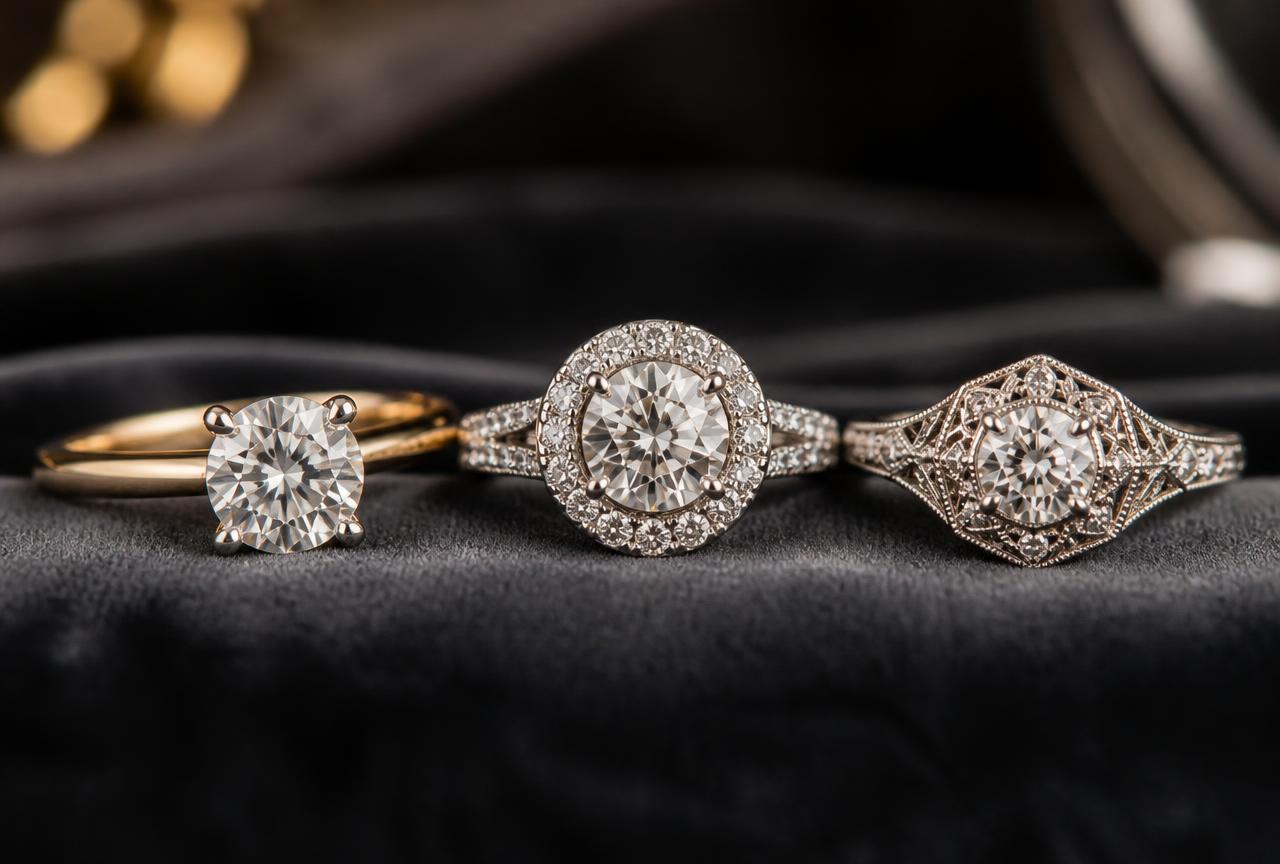
The Major Styles, and Who Each One Actually Suits
A solitaire is a single diamond on a clean band, and it remains timeless for a reason there’s nothing to distract from the stone itself, which makes it the natural choice for classic taste, minimalists, and anyone who wants the diamond to be the entire story. A halo surrounds a center diamond with a ring of smaller stones, creating extra sparkle and making the center stone appear noticeably larger than its actual carat weight, which makes it a favorite for anyone who wants maximum visual impact relative to budget. A hidden halo tucks that same ring of small diamonds underneath the center stone, invisible from above and only revealed from the side it reads as a clean solitaire at a glance, with a surprise detail for anyone who looks closer, appealing to modern brides who want subtlety with a bit of drama held in reserve.
A three-stone ring flanks the center diamond with two smaller stones, traditionally read as past, present, and future, which makes it a natural choice for romantics or as an anniversary upgrade loaded with symbolism. A pavé or micro-pavé band sets tiny diamonds directly into the band itself, adding sparkle along the entire ring rather than concentrating it at the center, and pairs well with virtually any center setting for anyone who wants brilliance from every angle. Vintage and Art Deco styles bring in intricate metalwork, milgrain edges, and filigree, often drawing directly from 1920s and 1930s design, which suits romantics and anyone who wants a ring with genuine character and history baked into the design. And a bezel setting surrounds the diamond with a thin metal rim instead of prongs, trading a small amount of sparkle for a dramatically more protective, modern silhouette the clear choice for active lifestyles, nurses, athletes, and anyone who works with their hands all day.
| Style | Best For | Signature Effect |
|---|---|---|
| Solitaire | Classic taste, minimalists | The stone is the entire story |
| Halo | Maximizing visual impact within budget | Centre stone appears 30–40% larger |
| Hidden Halo | Modern brides who want subtle drama | Solitaire from above, surprise detail from the side |
| Three-Stone | Romantics, anniversary upgrades | Symbolizes past, present, and future |
| Pavé / Micro-Pavé | Sparkle from every angle | Diamonds set along the entire band |
| Vintage / Art Deco | Antique lovers, character seekers | Milgrain, filigree, 1920s–1930s detail |
| Bezel | Active lifestyles, hands-on work | Maximum protection, modern silhouette |
What People Are Actually Choosing in 2026
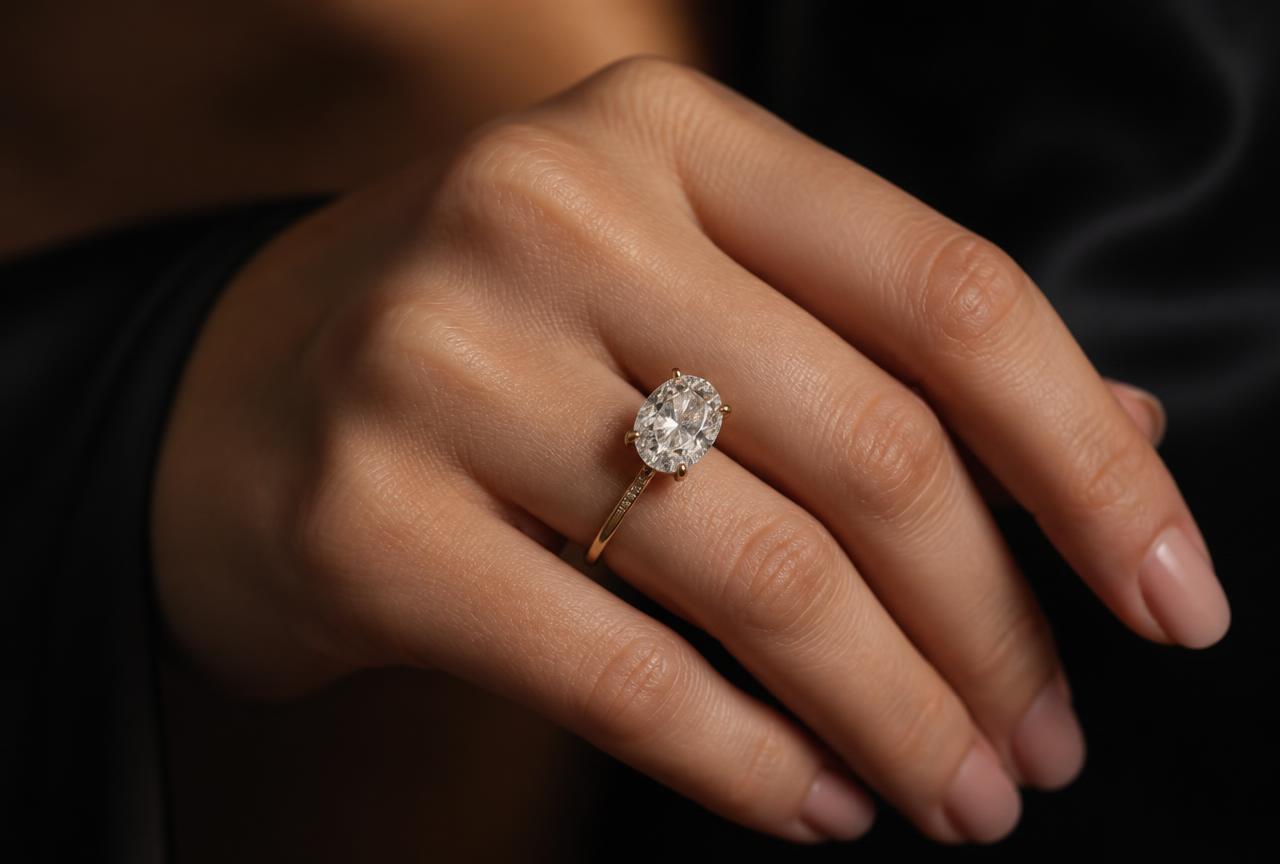
It helps to know where the broader market actually sits before assuming any one style is the safe or expected choice. The Knot’s 2026 Real Weddings Study, drawing on data from more than 10,000 US couples, found round remains the most-chosen center stone shape at 26%, with oval close behind at 25% a gap that’s narrowed sharply in recent years. On the metal side, white metals still hold a combined lead at 48%, but yellow gold has climbed to 39% and more than doubled in popularity over the past five years, driven partly by high-profile engagements and a broader shift toward warmer tones.
| Category | 2026 Data Point |
|---|---|
| Most popular center stone shape | Round, at 26% of US engagement rings |
| Closest competitor shape | Oval, at 25% within one percentage point of round |
| Most common metal overall | White metals (white gold + platinum) at 48% combined |
| Fastest-growing metal | Yellow gold, now at 39%, more than double its share five years ago |
Prongs vs. Bezel: The Practical Trade-off Nobody Mentions
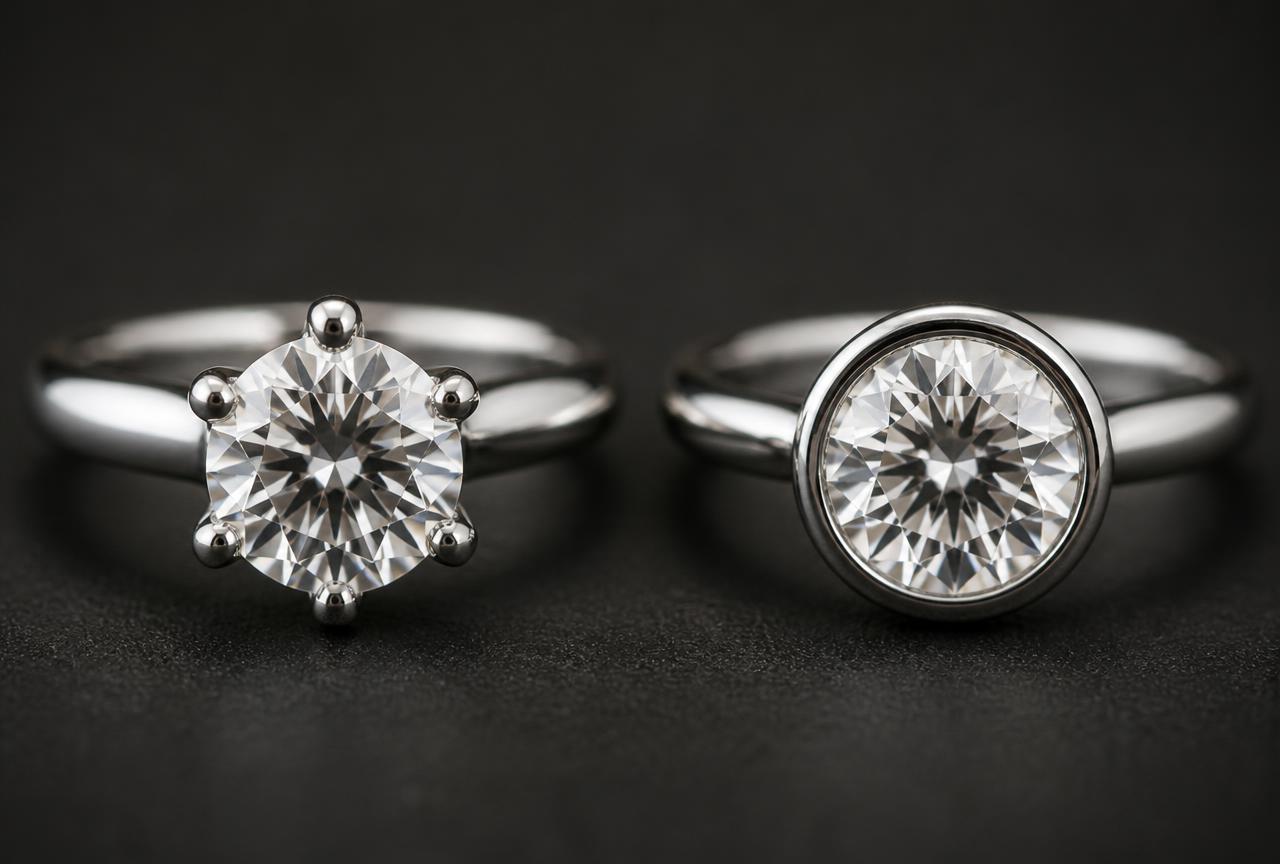
Every setting decision involves some tradeoff between sparkle and security, and nowhere is that clearer than comparing prongs to a bezel. A detailed comparison of prong and bezel security explains that prongs grip a diamond at just a few points, leaving the edges exposed to catch on fabric or take a direct hit, while a bezel’s continuous metal rim distributes pressure evenly around the entire girdle, making it dramatically more resistant to chips and far less likely to lose a stone entirely. The cost of that security is a slightly more contained sparkle, since the metal blocks some light from entering through the sides of the diamond that prongs would otherwise leave open.
| Factor | Prong Setting | Bezel Setting |
|---|---|---|
| Stone protection | Exposed at the edges; more prone to chips and loosening | Fully protected girdle; much lower risk of stone loss |
| Sparkle | Maximum light entry from all sides | Slightly more contained, still bright from the top |
| Everyday snag risk | Can catch on fabric, hair, or gloves | Smooth profile resists snagging |
| Maintenance | Should be checked every 6–12 months | Requires far less frequent checking |
Can You Mix Styles?
Absolutely, and it’s more common than people realize once they start looking closely at real rings rather than category photos. A bezel-set halo combines the protection of a bezel with the added visual size of a halo. A vintage-inspired three-stone ring borrows milgrain and filigree detailing while keeping the symbolism of a three-stone design. None of these combinations are design mistakes they’re simply personal choices, and a good jeweler should be able to walk through exactly how each element interacts with the others rather than insisting on a rigid, one-style-only approach.
The most successful mixed designs usually start from a clear priority rather than trying to combine everything at once. Someone whose top priority is durability but who also loves the look of a halo might start with a bezel and add a halo detail, rather than starting from a halo and trying to retrofit bezel-level protection onto it. Working from the single most important feature outward tends to produce a cleaner, more cohesive design than trying to check every box simultaneously.
Getting Guidance Built Around What You Actually Want
Reading about styles online is a good starting point, but seeing how a specific setting actually interacts with a specific hand, lifestyle, and stone is where the real decision gets made. Heavenly Gems & Designs offers private appointments built around exactly that kind of guidance no pressure, no sales floor, just a straightforward conversation about which setting actually fits the life the ring is going to live in every day.
That conversation tends to matter more than any single style choice on its own. A ring is worn every day for decades, through work, workouts, dishes, and everything in between, so the practical fit between setting and lifestyle often ends up mattering just as much as which style photographed best on a screen.
Talk Through Your Setting With a Designer
Book a private, no-pressure appointment with Heavenly Gems & Designs and see how each setting looks and wears on your hand before you choose a stone.
Book an Appointment