Diamond Education
The 4Cs of Diamonds, Explained Without the Sales Pitch
Key Takeaways
- ◆Cut is the one C that can't be fixed after the fact a poorly cut diamond looks dull no matter how good its color or clarity grade is, so never go below Very Good.
- ◆The difference between a D and a G color grade is invisible to the naked eye in most settings, which makes G-H the sweet spot most people never regret choosing.
- ◆Clarity grades above VS1 are paying for flaws no one, including a jeweler with a loupe across the room, will ever actually see.
- ◆Carat is weight, not size a well-cut diamond can look larger than a bigger, deeply cut one, and prices jump disproportionately right at round-number thresholds like 1.00 or 1.50 carats.
- ◆The smartest diamond budgets spend heavily on cut and quietly save on color, clarity, and carat positioning all without any visible compromise.
Why the 4Cs Exist (and Why They're Not All Equal)
Before the 4Cs existed, buying a diamond was mostly guesswork dressed up in vague language a stone might be described as “water” for its clarity or simply “made well” for its cut, with no consistent standard behind any of it. The Gemological Institute of America created cut, color, clarity, and carat weight specifically to fix that problem, giving buyers and jewelers a shared, objective language anywhere in the world. Understanding how those four factors actually work, and which ones genuinely affect what you see versus what you're simply paying extra for, is exactly the kind of guidance a good jeweler offering fine jewelry services in Central Valley should walk you through before you ever look at a single stone.
Here's the part that surprises most first-time buyers: the 4Cs are not four equally weighted factors. One of them can ruin a diamond regardless of how well the other three score, and the other three have genuine sweet spots where spending more buys you nothing you or anyone else will ever notice.
Knowing which is which is the entire difference between overpaying for a mediocre stone and finding a stunning diamond at a genuinely fair price.
It's worth saying plainly why this confusion persists: certificates list all four grades with equal visual weight, so it's natural to assume they matter equally too. A GIA report doesn't rank the Cs by importance it just states the facts and leaves the interpretation to the buyer. That's exactly the gap where a good jeweler's guidance becomes genuinely useful, translating a page of grades into a plain answer about what will actually be visible on someone's hand.
Cut: The One C You Can Never Fix Later
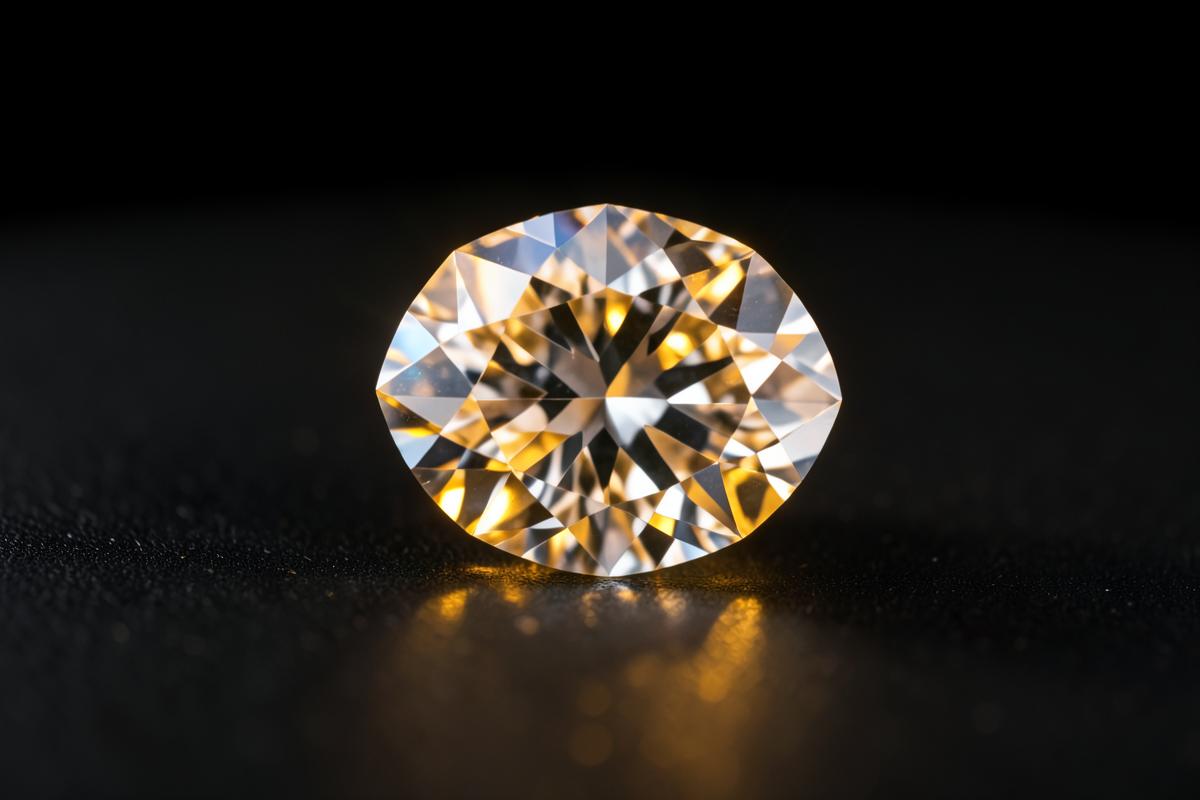
Cut doesn't refer to a diamond's shape round, oval, cushion, whatever you picture doesn't factor in here. It refers to how precisely the facets are angled and proportioned, and how effectively that precision lets light enter, bounce around, and exit as brilliance. GIA's own grading standards describe cut as one of the institute's core contributions to the industry precisely because it has such an outsized effect on how a diamond actually looks in person, regardless of its size or price tag on paper. A poorly cut diamond leaks light through the bottom and sides and looks dark and lifeless no matter how good its color or clarity grade is. There is no fixing that after the purchase the facets are already cut, and no setting or lighting trick brings back light that's escaping out the back of the stone.
| Cut Grade | What You Actually See |
|---|---|
| Excellent | Maximum brilliance and fire; light returns almost entirely through the top |
| Very Good | Nearly identical sparkle to Excellent, often at a friendlier price |
| Good | Noticeably less lively; acceptable but a step down in brilliance |
| Fair | Visibly dull in most lighting; light escapes through the sides or bottom |
| Poor | Flat, lifeless appearance regardless of color or clarity grade |
Color: Where Most People Overpay Without Knowing It
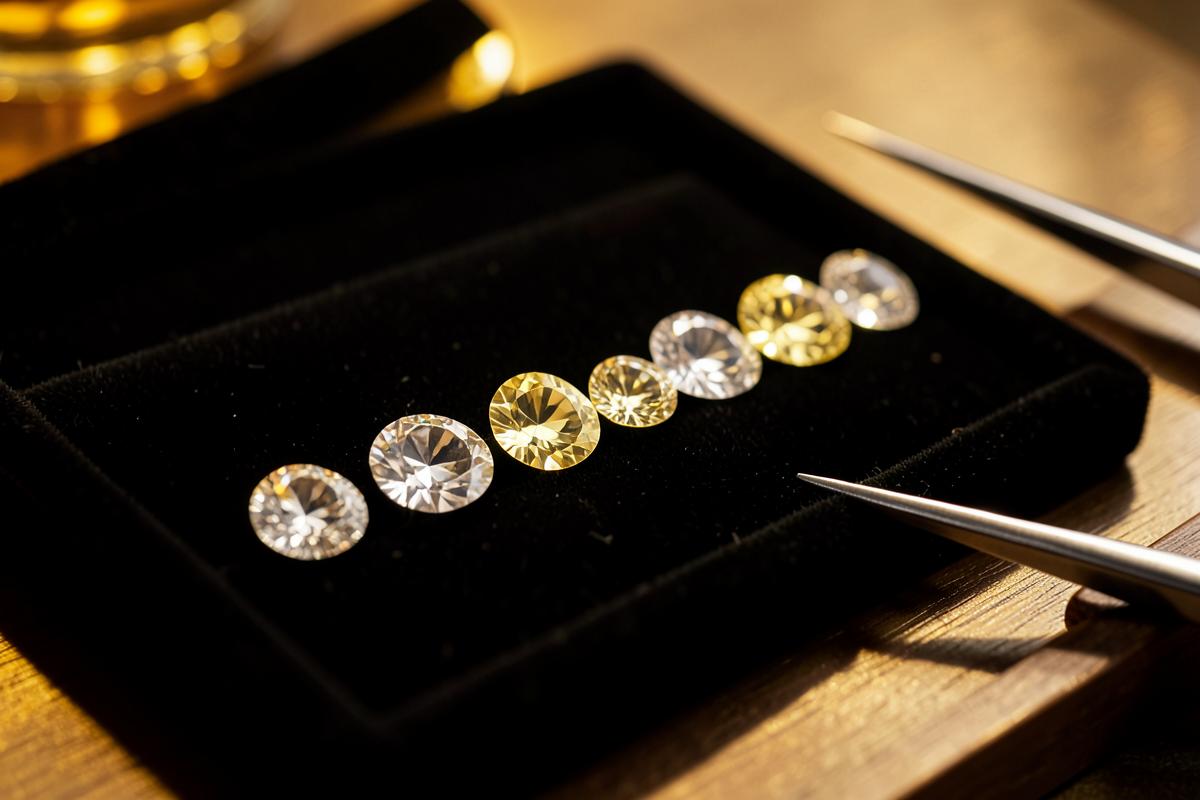
Diamonds are graded on a scale from D, completely colorless, down to Z, a noticeably light yellow. The catch is that the difference between a D and a G is essentially invisible to the naked eye once the stone is mounted, especially in white gold or platinum settings where the metal itself doesn't compete with any warmth in the stone. Spending up into the D-F range is rarely worth the premium unless the goal is a graded certificate number rather than a visibly different stone. For yellow gold settings, the calculus shifts even further in the budget-conscious buyer's favor, since the warm metal tone masks slight yellow tints that would otherwise be more noticeable in white metal.
| Color Range | Grades | Best Paired With |
|---|---|---|
| Colorless | D – F | White gold or platinum, for buyers prioritizing certificate grade |
| Near-colorless | G – J | White gold or platinum; the general sweet spot for most buyers |
| Faint color | K – M | Yellow or rose gold, where warm tones blend with the metal |
Clarity: Paying for Flaws You Will Never See
Clarity measures internal inclusions and surface blemishes, graded on a scale running from FL, flawless, all the way down through IF, VVS1, VVS2, VS1, VS2, SI1, SI2, and finally I1 through I3. The International Gemological Institute's consumer guidance notes that clarity grading specifically evaluates the visibility, size, and location of these characteristics under standardized magnification, not simply whether a diamond has flaws at all — virtually every diamond does, at some level. The practical sweet spot most jewelers point buyers toward is VS1 to VS2, or a well-chosen “eye-clean” SI1, meaning any inclusions present are invisible without magnification. Paying extra for VVS or FL grades is, in almost every real-world case, paying for invisibility on top of invisibility.
Where an inclusion sits matters just as much as its grade. An inclusion positioned directly under the table, the flat top facet, is far more visible than one tucked near the girdle edge, and an inclusion that happens to fall under a prong in the final setting can end up completely hidden regardless of its official grade. A good jeweler will talk through inclusion location, not just recite the grade off a certificate.
Carat: Just Weight, and the Psychology of Round Numbers
Carat measures weight, not visual size, and the two aren't as tightly linked as most people assume. A well-cut 1-carat diamond, with proportions that keep its face-up spread wide relative to its depth, can look larger than a deeper-cut 1.3-carat stone that's carrying extra hidden weight below the girdle where no one sees it. On top of that, pricing tends to jump disproportionately right at round-number and half-carat thresholds 0.50, 1.00, 1.50, 2.00 because of how buyers search and shop, not because of any real jump in the diamond's physical size. A diamond weighing 0.95 carats looks essentially identical, face-up, to a full 1.00-carat stone, and buying just under that threshold is one of the simplest ways to stretch a budget without any visible compromise.
| Carat Weight | Approximate Face-Up Diameter (Round Brilliant) |
|---|---|
| 0.50ct | ~5.1mm |
| 0.75ct | ~5.8mm |
| 0.95ct | ~6.3mm |
| 1.00ct | ~6.4mm |
| 1.50ct | ~7.3mm |
Where to Spend, Where to Save
Put all four together and a clear strategy emerges: spend on cut, every time, since it's the one factor that can't be corrected later and the one most responsible for how the diamond actually looks. Save on color by staying in the G-H range unless a certificate grade specifically matters to you. Save on clarity by choosing VS2 or a genuinely eye-clean SI1 rather than paying for invisible perfection. And save on carat by considering a stone just under a round-number threshold, where the price drops noticeably but the visible size doesn't.
| 4C | Recommended Approach |
|---|---|
| Cut | Spend always Excellent or Very Good, no exceptions |
| Color | Save G to H covers nearly every setting without visible tradeoff |
| Clarity | Save VS1–VS2 or eye-clean SI1 is the practical sweet spot |
| Carat | Save buy just under round-number thresholds for the same look |
Getting Guidance You Can Actually Trust
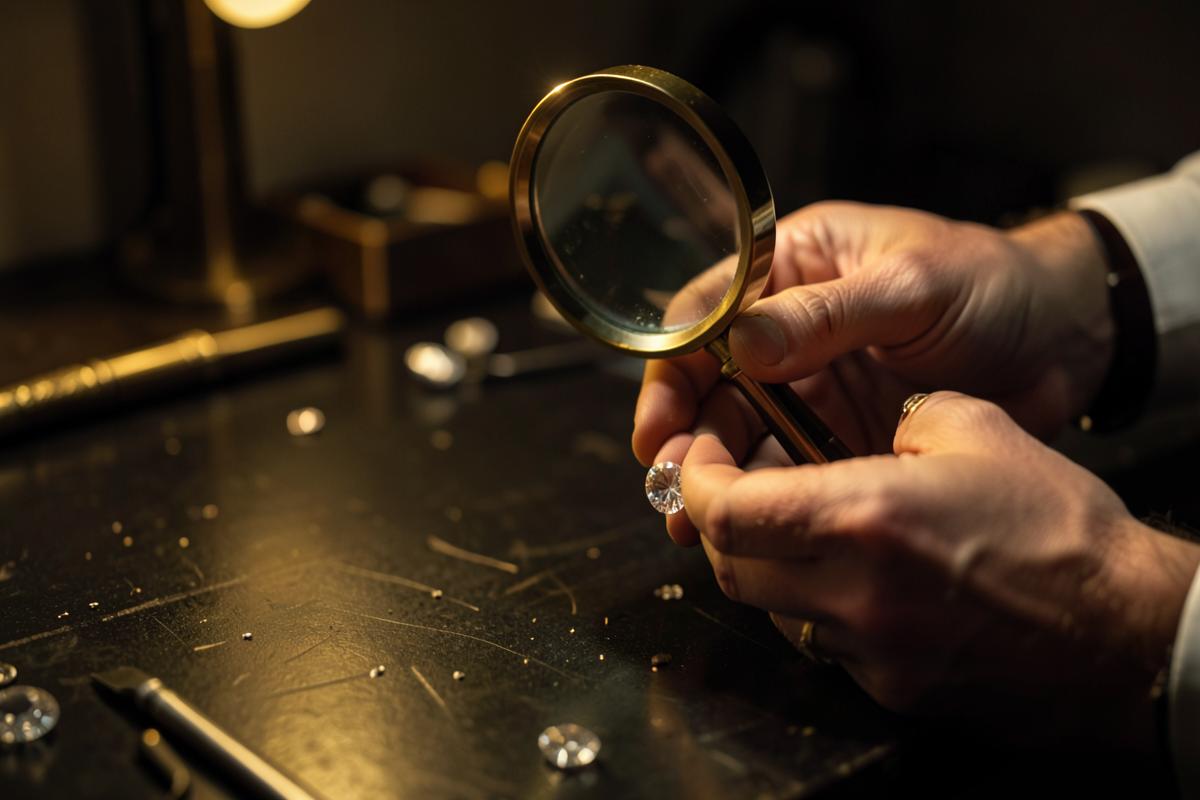
The 4Cs give you the vocabulary, but knowing how to apply them to an actual stone in front of you checking inclusion placement, comparing cut proportions, weighing a certificate against what you'll actually see is where a knowledgeable jeweler earns their keep. Heavenly Gems & Designs walks buyers through exactly this kind of comparison in private, no-pressure appointments, matching a stone's actual grades against what a client will notice day to day rather than pushing whatever carries the highest price tag on the sales floor.
Compare Diamonds With Someone on Your Side
Bring your budget and your questions, and we will walk through cut, color, clarity, and carat on real stones side by side.
Book a Private Appointment